VR horror game with themes of control and loss of autonomy
2026
Project
Anaesthesia
About the project
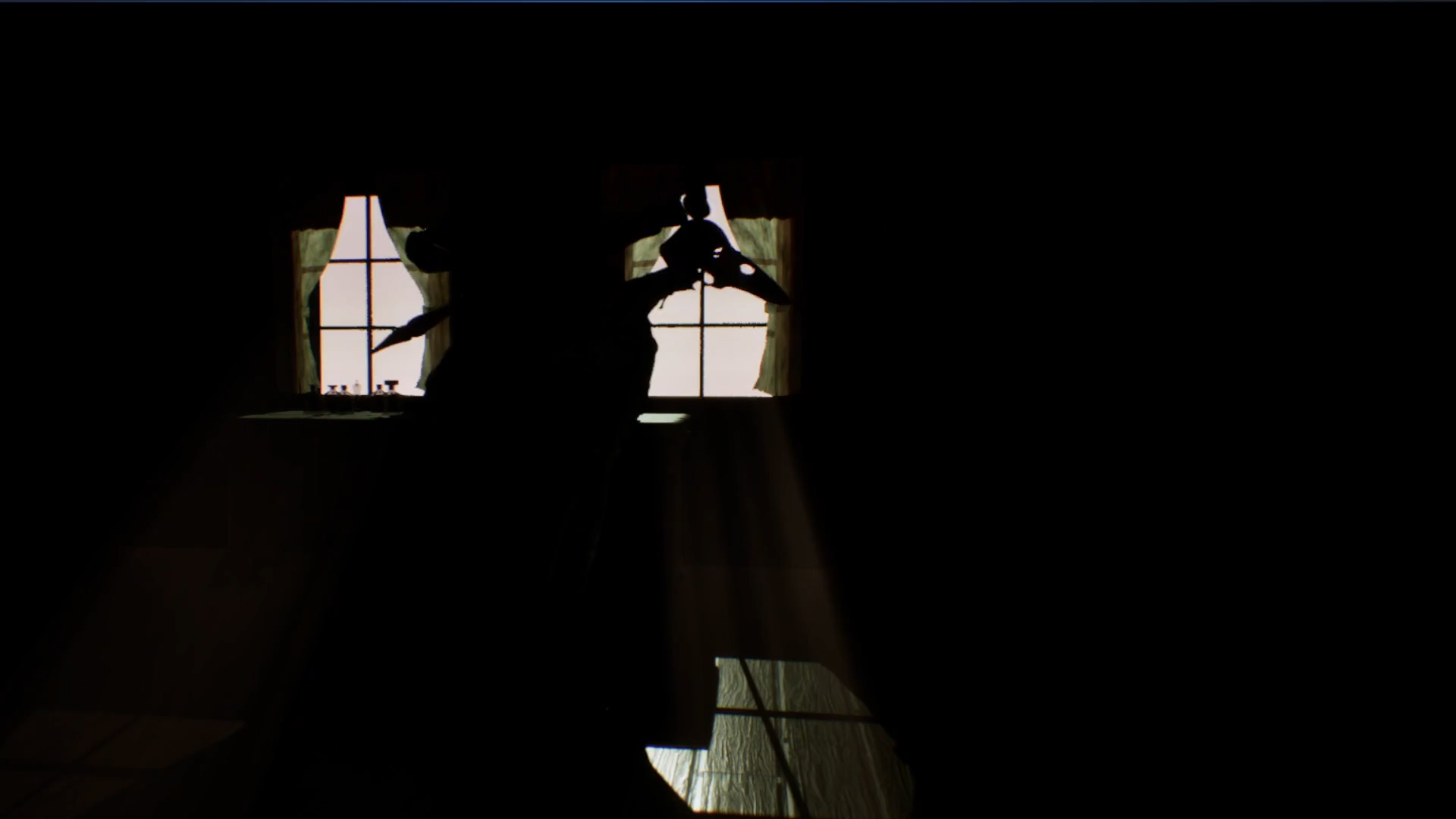
Anaesthesia is a playable VR experience in which the player undergoes an operation through the eyes of a woman living in the Victorian era. This game tackles the themes of losing control of your body and autonomy, which is conveyed through the player’s loss of ability to interact with the scene, forced to watch an unsettling scene play out as the player character sees the doctor’s office through a disturbing hallucination as a result of the anaesthetic. For this group project, I created environmental assets, designed, modelled, rigged and textures the monster in the game and recorded and polished motion capture footage for both the monster and doctor.

Environment assets
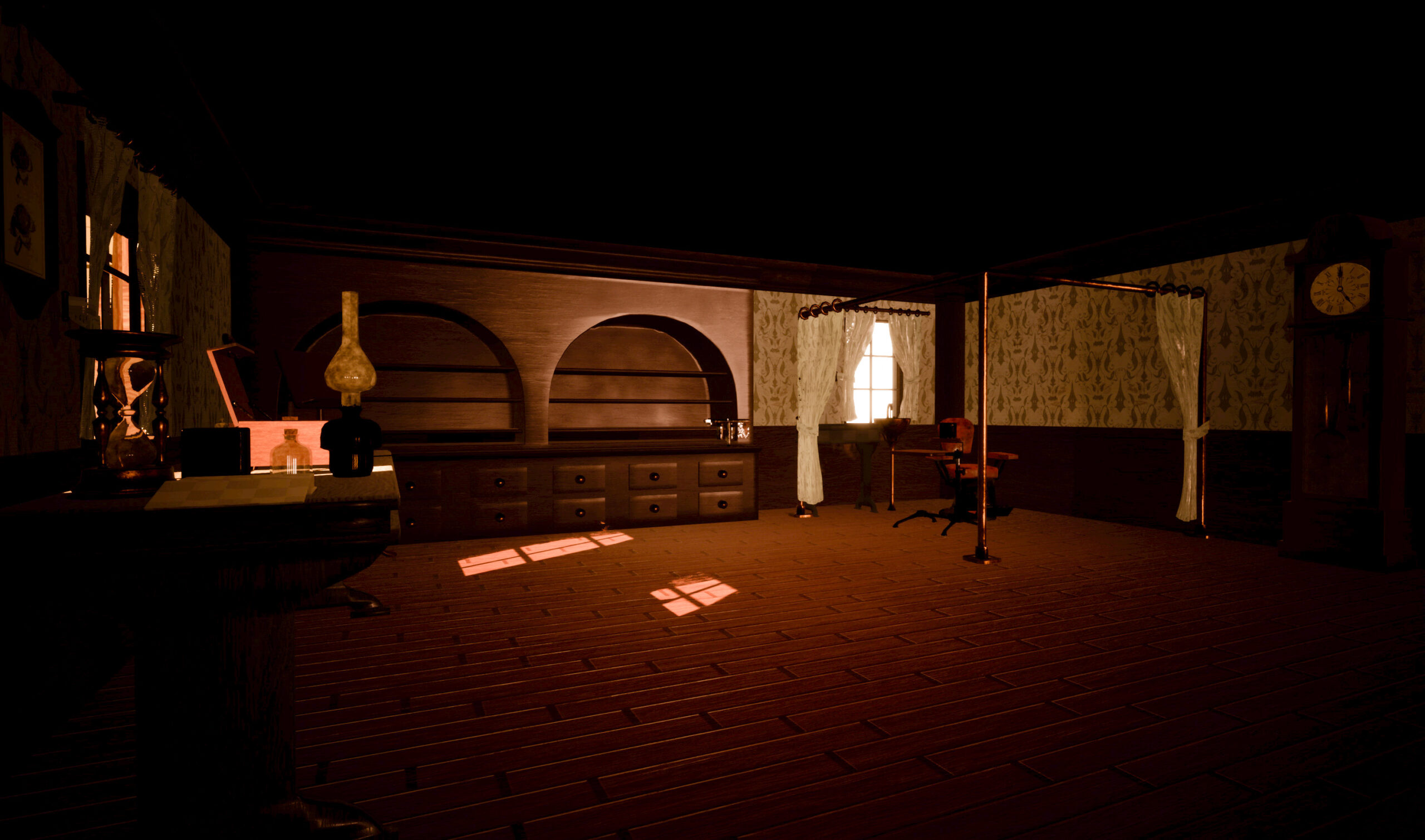
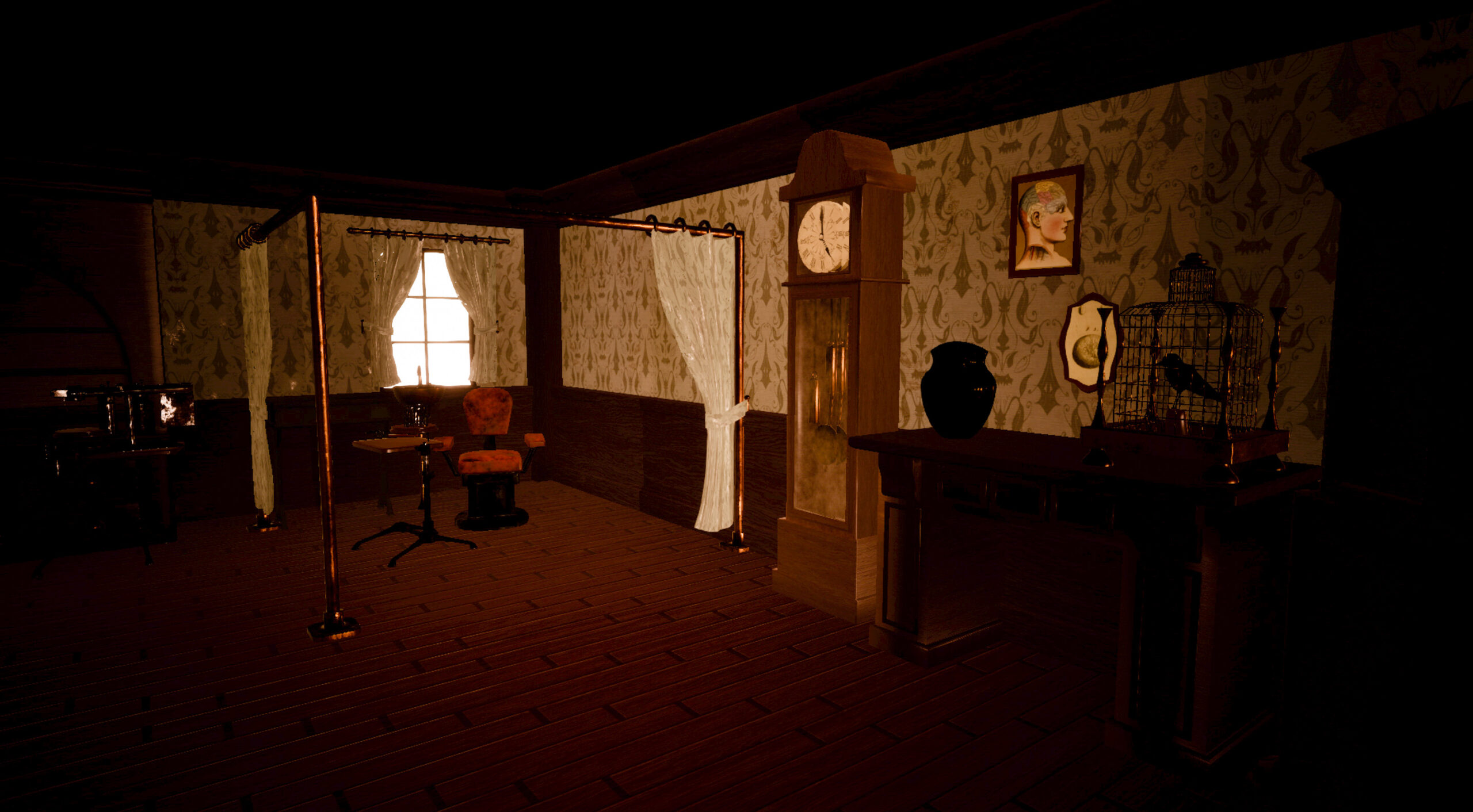
The models for the environment were modelled in Blender, with extensive research conducted to ensure that the assets made were accurate to the Victorian time period. The assets were then exported to Unreal to be added to the doctor’s office.
Cloth simulation
As well as static models, I also created a cloth simulation in Blender, which was animated to move in sync with the monster’s hand when it pulls the curtain to reveal itself to the viewer. I adjusted the settings to recreate the physics of a lace curtain, which would have been commonly seen in the Victorian era.
Monster Development
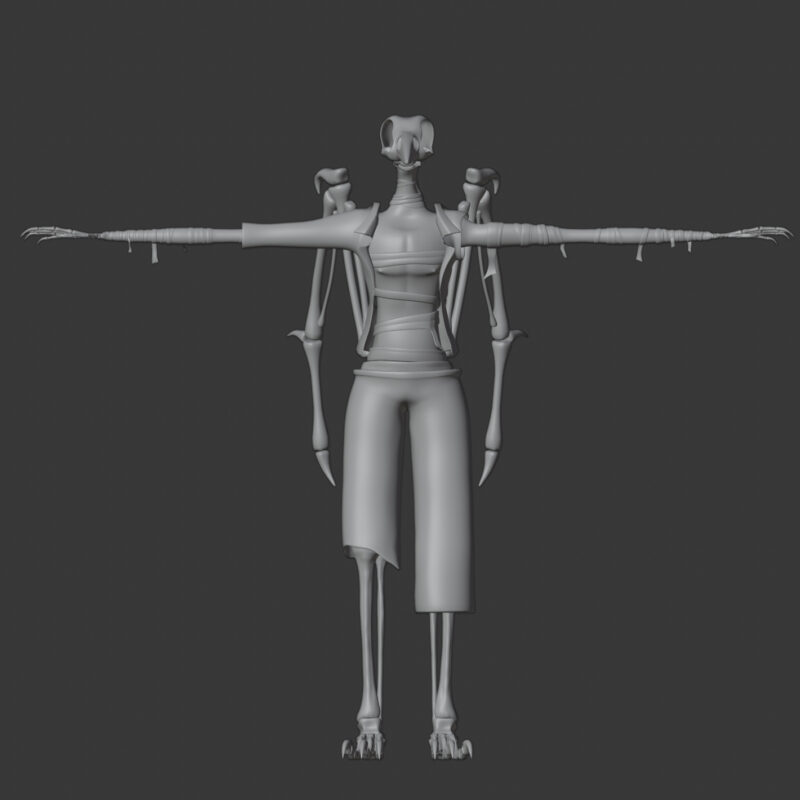
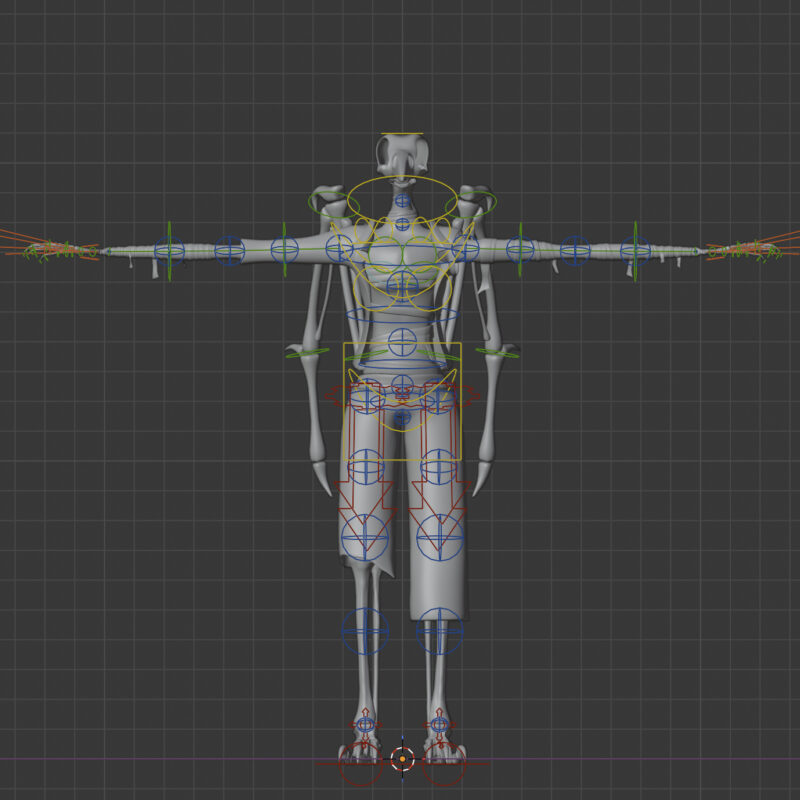
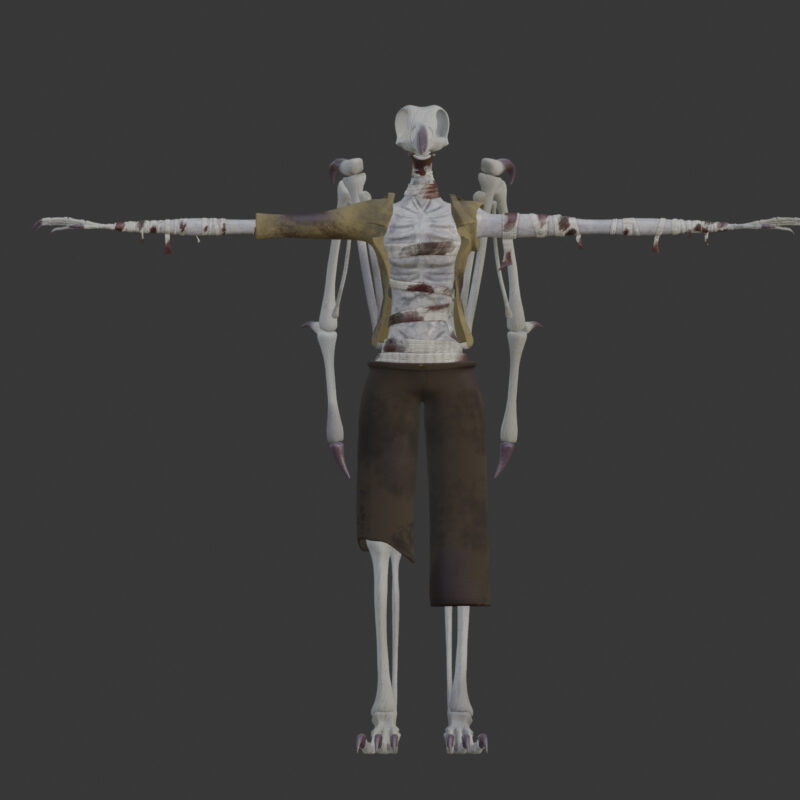
For this project, I developed the monster through the entire character creation pipeline. The monster was modelled to be easily identifiable as another form of the doctor, but with elongated limbs, skeletal features and bloodied, torn clothing to create a grotesque form. The monster also has bird-like features, including a crow’s skull and wing bones, as crows are often associated with death.
Concept Renders
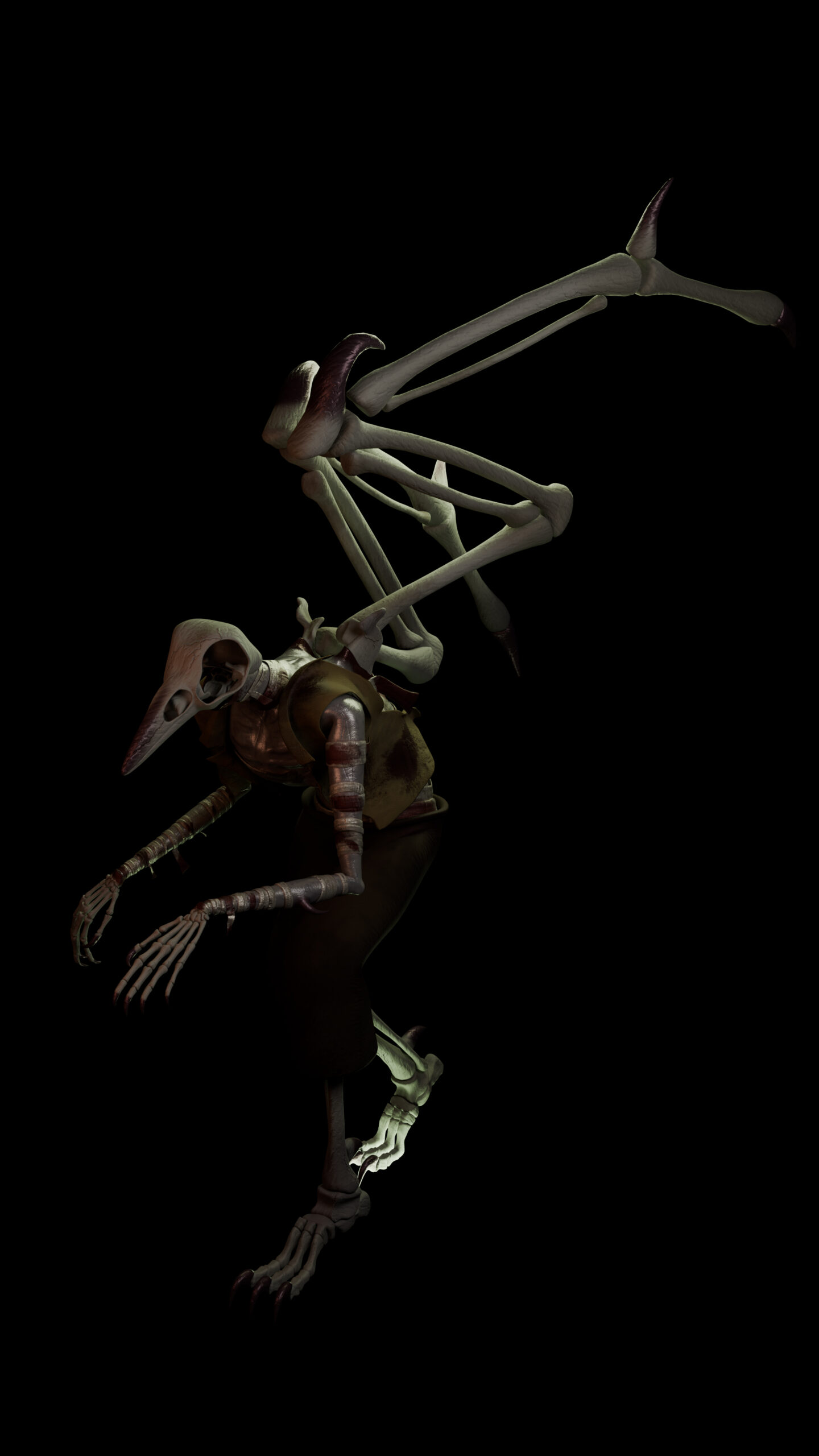
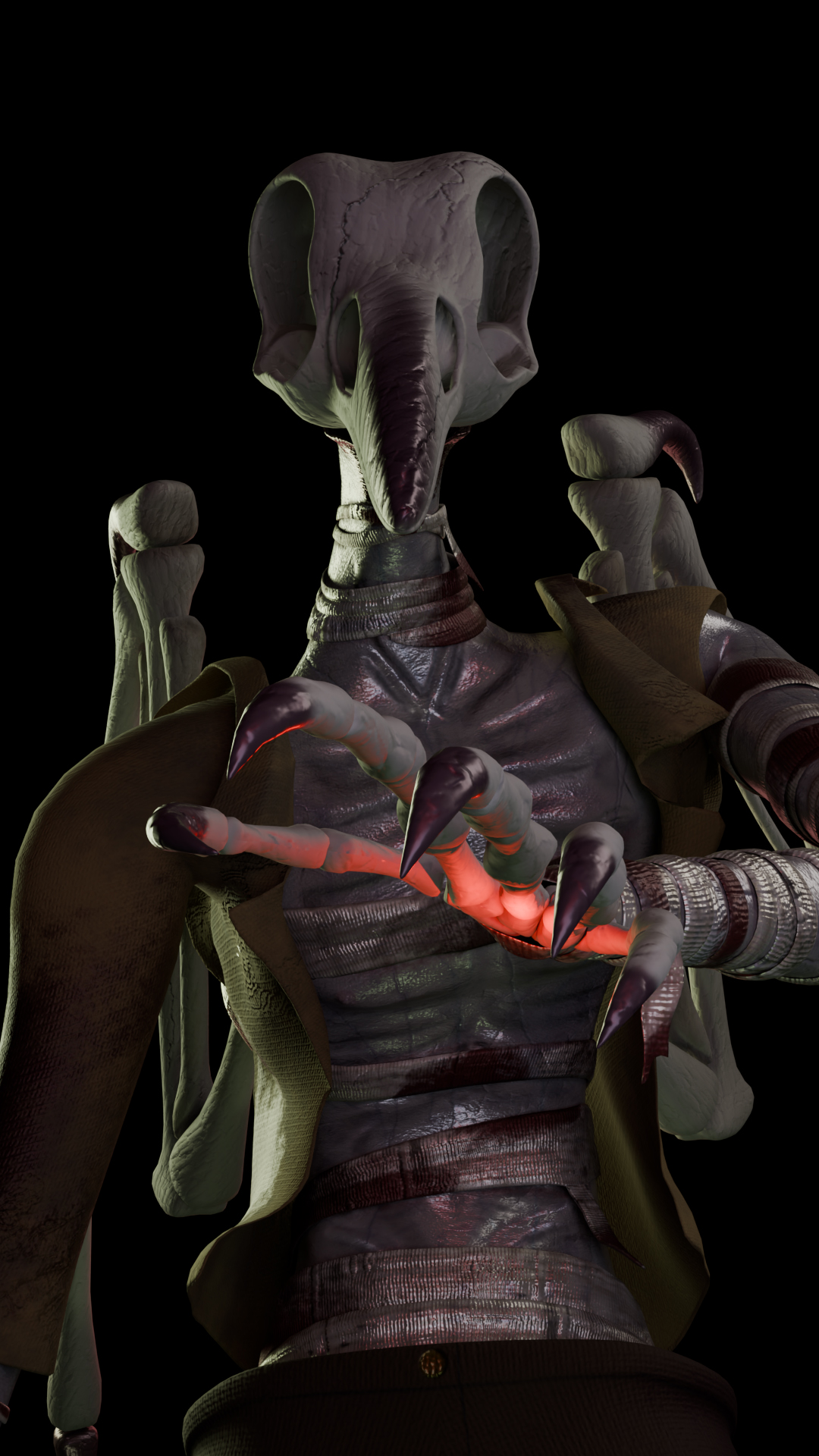
I created posed renders in Blender under dark conditions, illuminated with a sickly green light. These renders would allow me to test both the rigging of the model and the appearance of its textures under an alternative lighting scheme, similar to that of the hallucinated environment in Anaesthesia.
Animation
The animation of the non-player characters was created using motion-capture, before being polished in Blender then exported to Unreal. The clean-up process involved baking the recorded footage into individual keyframes, then adjusting the position and rotation of the characters’ bones from the graph editor.

Gameplay
Above is a run-through of the game, recorded in VR, to showcase the environment, character modelling and animation as viewed from within the scene.